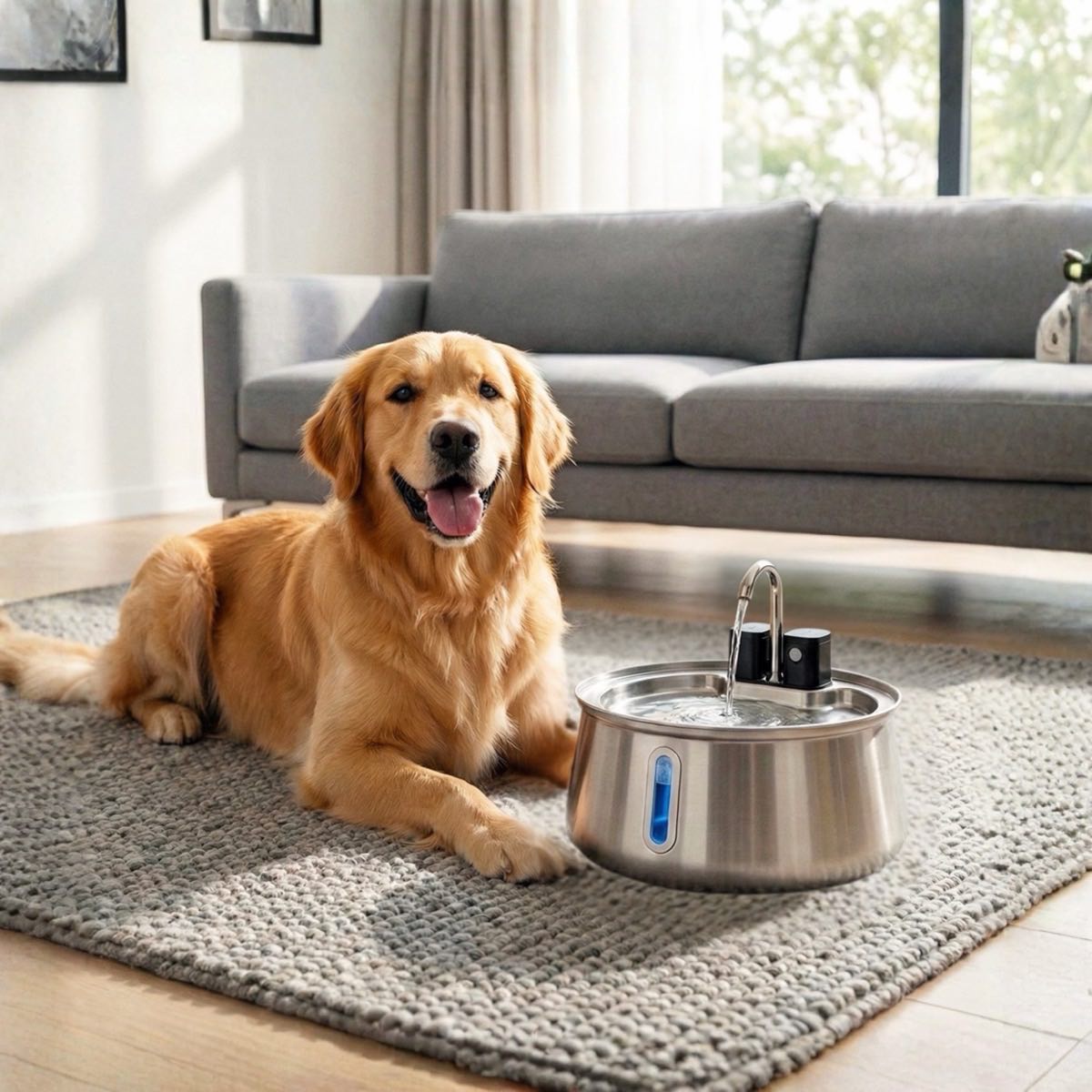
A daily water estimate can help you understand scale. It cannot tell you whether an individual dog is healthy, and it should never become a limit on access to fresh water. The most useful comparison is often between your dog’s usual pattern and a change you have noticed.
The short answer
Understand the routine before choosing equipment
Use the care guidance below to decide your next step. Product features cannot establish what an individual dog needs or replace advice from your vet.
Understand the equipment01 / The detail
Use the number as a starting point
PetMD gives one ounce per pound as a general guideline, while emphasising individual variation. Using US fluid ounces, a 20 lb dog works out to about 590 mL; a 40 lb dog to about 1.2 litres; and a 60 lb dog to about 1.8 litres. These are rounded examples, not prescribed amounts. [1]
Do not ration water to match a calculation or try to make your dog finish an estimated volume. Ask your vet for guidance if your dog has a medical condition or if you are concerned about either unusually low or unusually high intake.
02 / The detail
Food and activity change the picture
VCA’s feeding guidance explains that water needs vary with environmental temperature and activity. Its sick dog guidance also notes that canned food supplies substantial moisture. The amount missing from the bowl is therefore not a complete measure of total water intake. [2, 3]
When you record a day’s drinking, add a few words about that day: usual food or a new food, a quiet day or a long outing, familiar conditions or unusually warm weather. Those details are more useful than treating every day as identical.
The reservoir measures capacity. Your dog’s routine gives that number context.
03 / The detail
Measure without making water harder to access
Use a measuring jug to record what you put into a clean bowl and any refills. Measure what remains at the same time the next day, and note spills or water discarded for cleaning. Keep fresh water available throughout; the record should fit around care, not interrupt it.
Shared bowls, drinks outdoors and splashing make the result approximate. A reservoir used by two dogs cannot tell you how much either one drank. Note those limitations if you discuss the record with your vet, and do not delay a call about an unwell dog while collecting data.
04 / The detail
Reservoir capacity is a different number
The capacity printed on a fountain is how much it holds, not how much your dog should drink. A 7L model is not a seven day care plan, and a 4L model does not set a daily target.
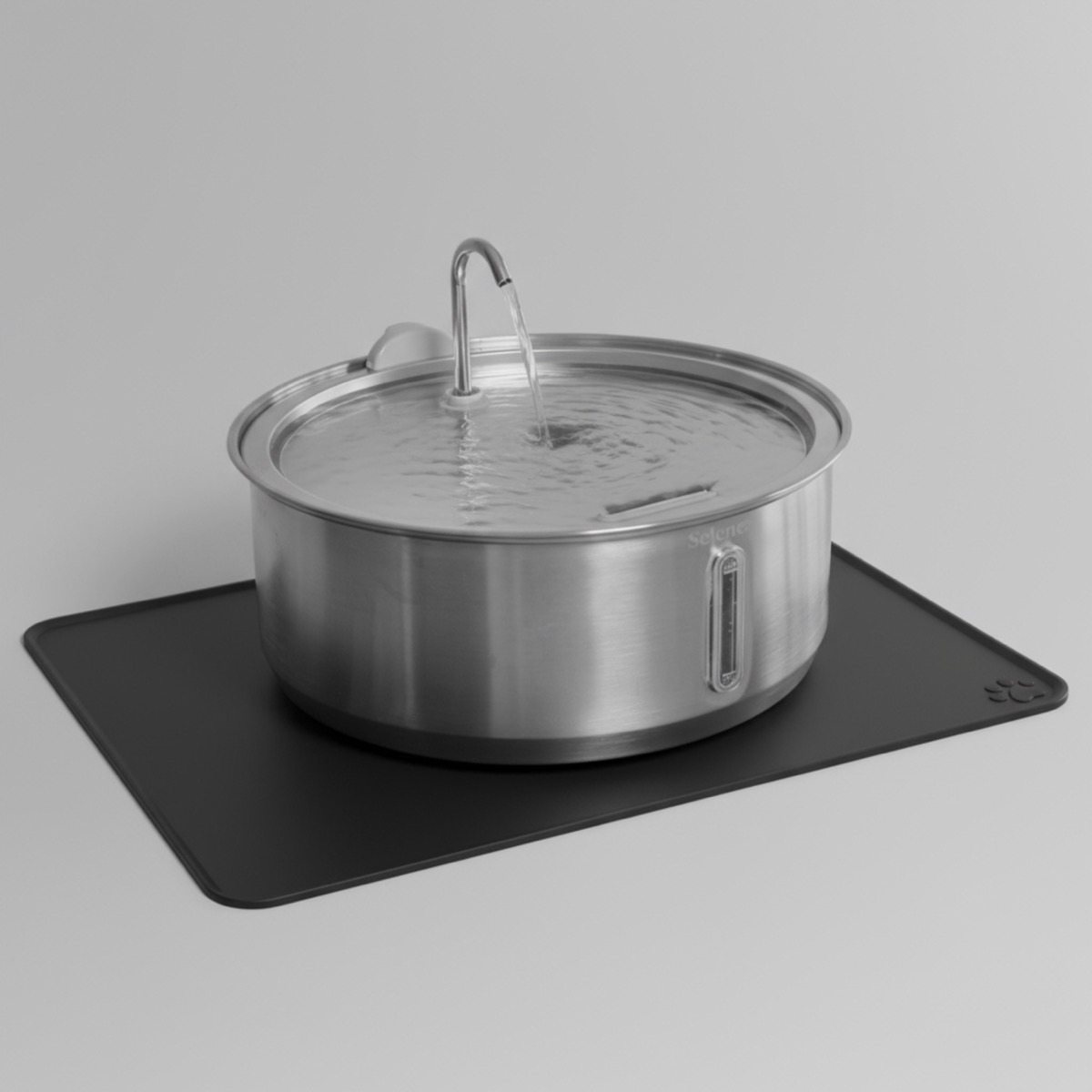
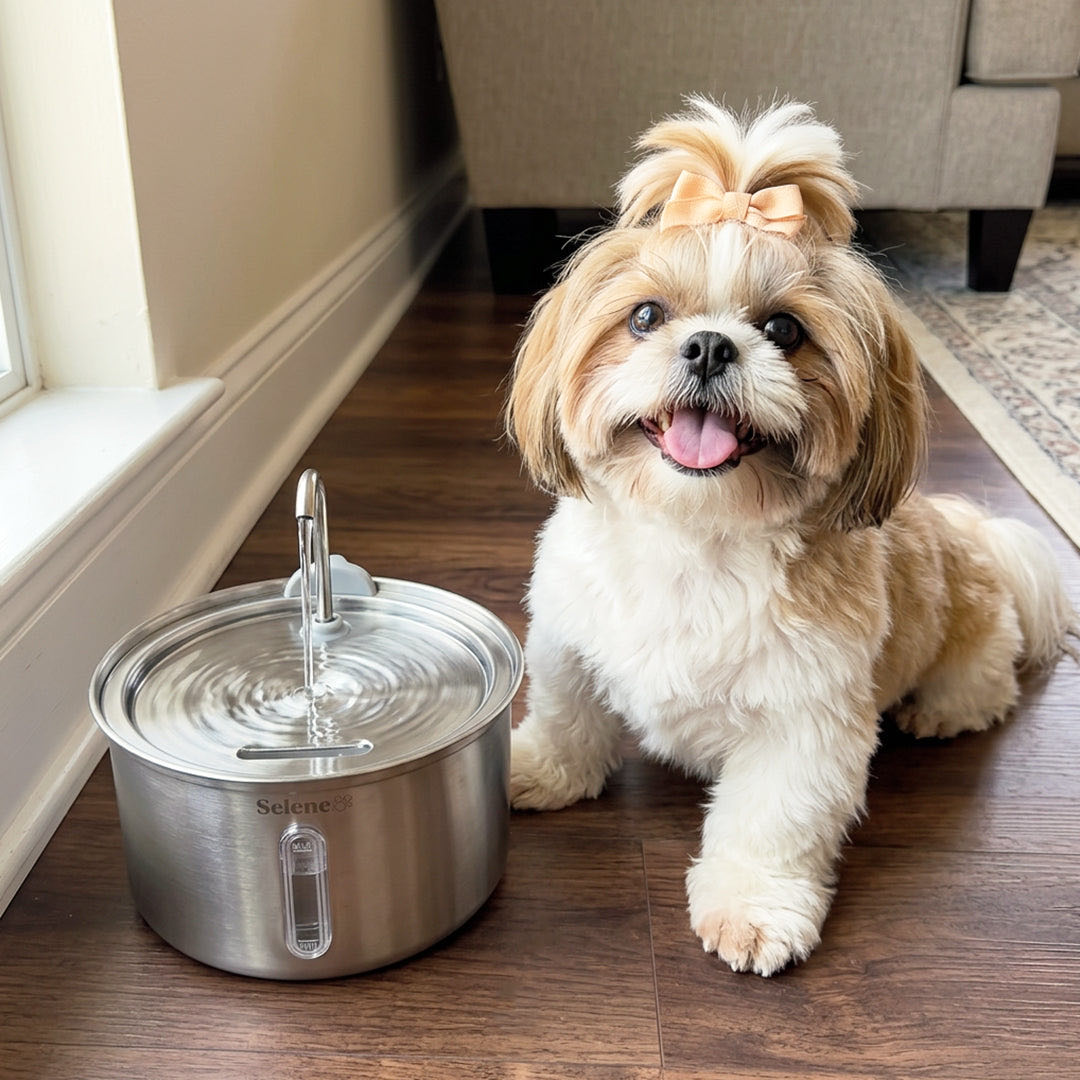
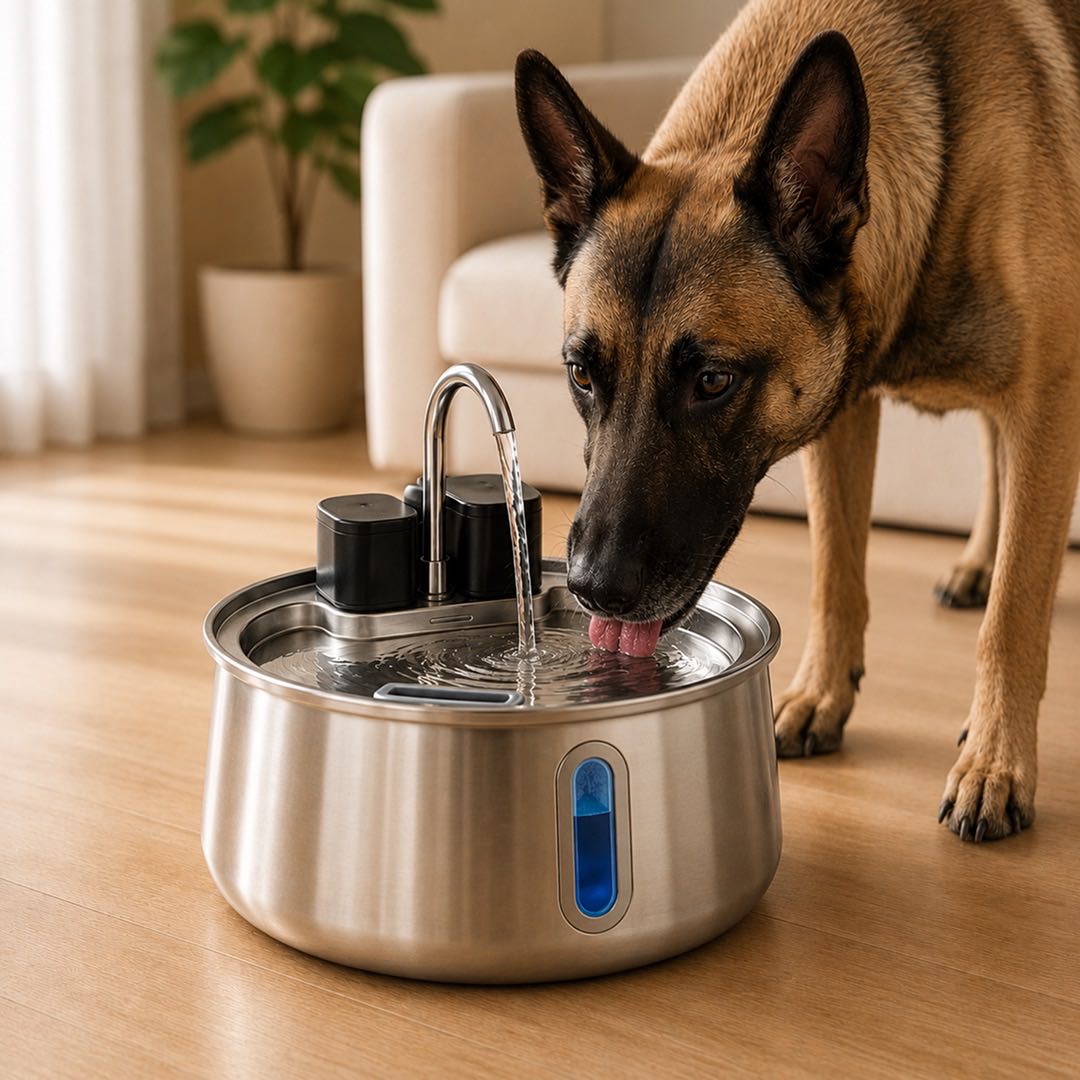
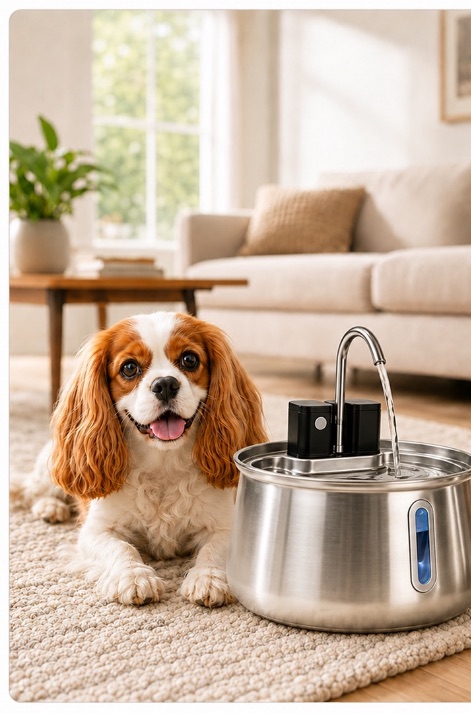
Selene lists both sizes, with plug in and wireless versions. Choose capacity alongside the space available and how you will lift, empty and clean the unit. A bigger reservoir may suit your setup, but it still needs regular attention. [4]
05 / The detail
Take changes seriously in either direction
VCA advises consulting a vet about changes in drinking behaviour. Drinking noticeably more can matter just as much as drinking less. Do not restrict water to reduce toilet trips unless your vet has given specific instructions. [2]
If you simply want a more practical drinking station, compare equipment after you understand the routine. If you are trying to explain a new pattern, take your observations to the person who can assess your dog.
Before you go
Your questions, answered
How much is one ounce per pound in metric units?
Approximately 65 mL per kilogram, using US fluid ounces. The conversion is a rough guide, not an individual prescription.
Does a bigger fountain mean my dog will drink more?
No. It tells you how much water the equipment holds. It does not predict your dog’s intake or remove the need to check and clean the unit.