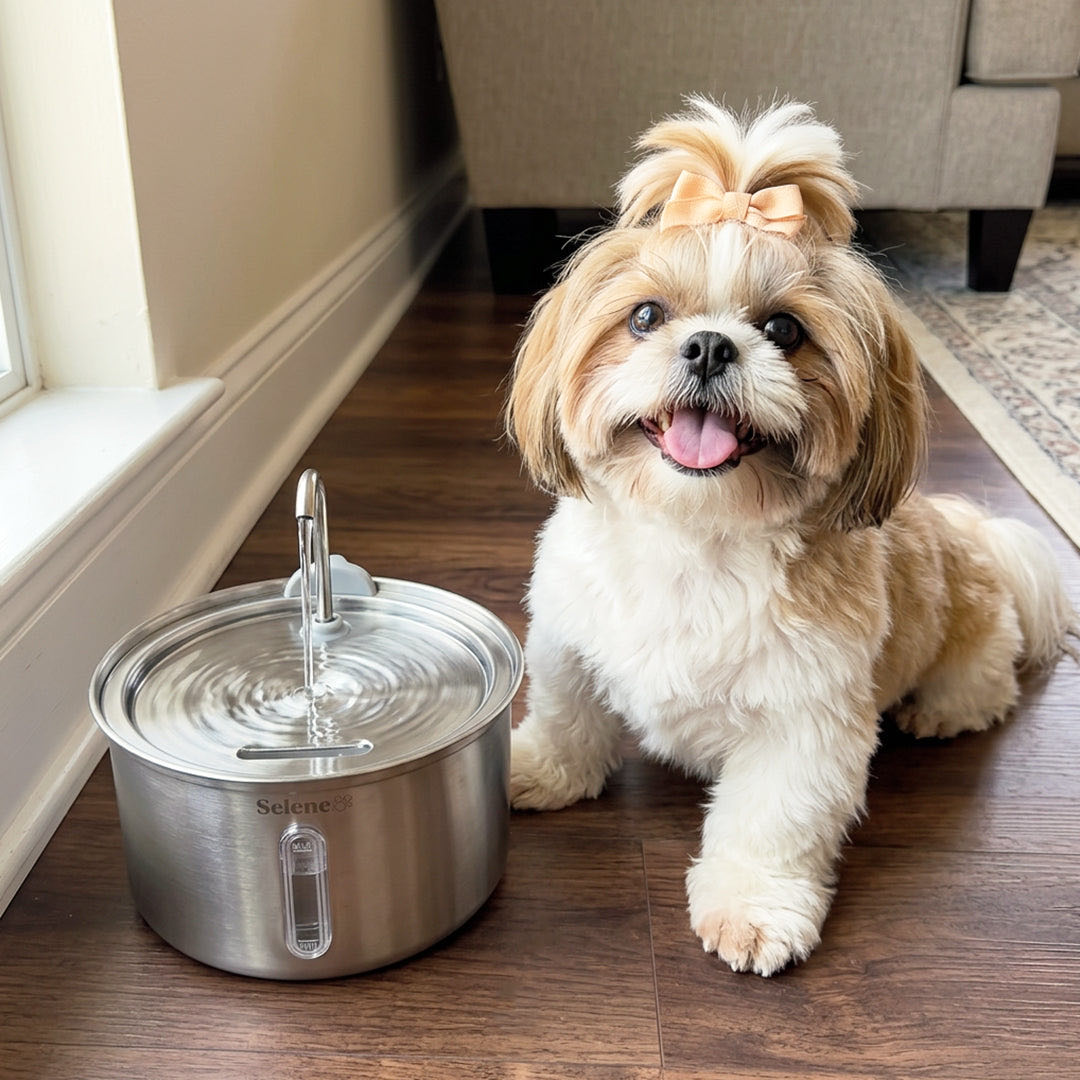
You fill the bowl in the morning. By evening, it looks almost untouched. Before you decide your dog is simply fussy, separate two questions: has your dog’s drinking changed, and is the water setup easy to use? The first may need veterinary advice. The second gives you practical things to check at home.
The short answer
Understand the routine before choosing equipment
Use the care guidance below to decide your next step. Product features cannot establish what an individual dog needs or replace advice from your vet.
Understand the equipment01 / The detail
Start with what has changed
PetMD’s veterinary guidance lists several possible reasons for reduced drinking, including wetter food, dental pain, nausea, difficulty reaching the bowl and stress. A dog eating wet food may take in more moisture through meals. That does not mean every untouched bowl is explained by diet. [1]
Write down when you first noticed the change, what your dog is eating, and any changes in appetite, energy or toilet habits. This gives your vet a clearer picture than a guess that your dog is being picky. Do not wait to finish a drinking diary if your dog seems unwell.
02 / The detail
Look at the bowl from your dog’s level
Is the route clear? Is the bowl steady? Is it beside a noisy appliance or in a busy doorway? A location chosen because it is out of your way may not be the easiest place for your dog to stop and drink.
Check the water itself and the inside of the bowl. PetMD notes that an unclean bowl can develop a film that makes water smell or taste unappealing. Emptying, washing and refilling it is a useful first step; topping up yesterday’s water does not clean the surfaces. [1]
An untouched bowl is a reason to ask questions, not a diagnosis.
03 / The detail
Change one part of the setup at a time
Try a freshly washed bowl in an accessible, quiet spot while keeping the familiar drinking station available. Make a note of which one your dog uses. If you change the location, vessel and water all at once, you will have less idea which change made a difference.
Think of this as observing preferences after a health concern has been addressed. A successful drink from a new bowl is useful information, but it does not rule out illness or explain an ongoing change.
04 / The detail
When moving water is worth considering
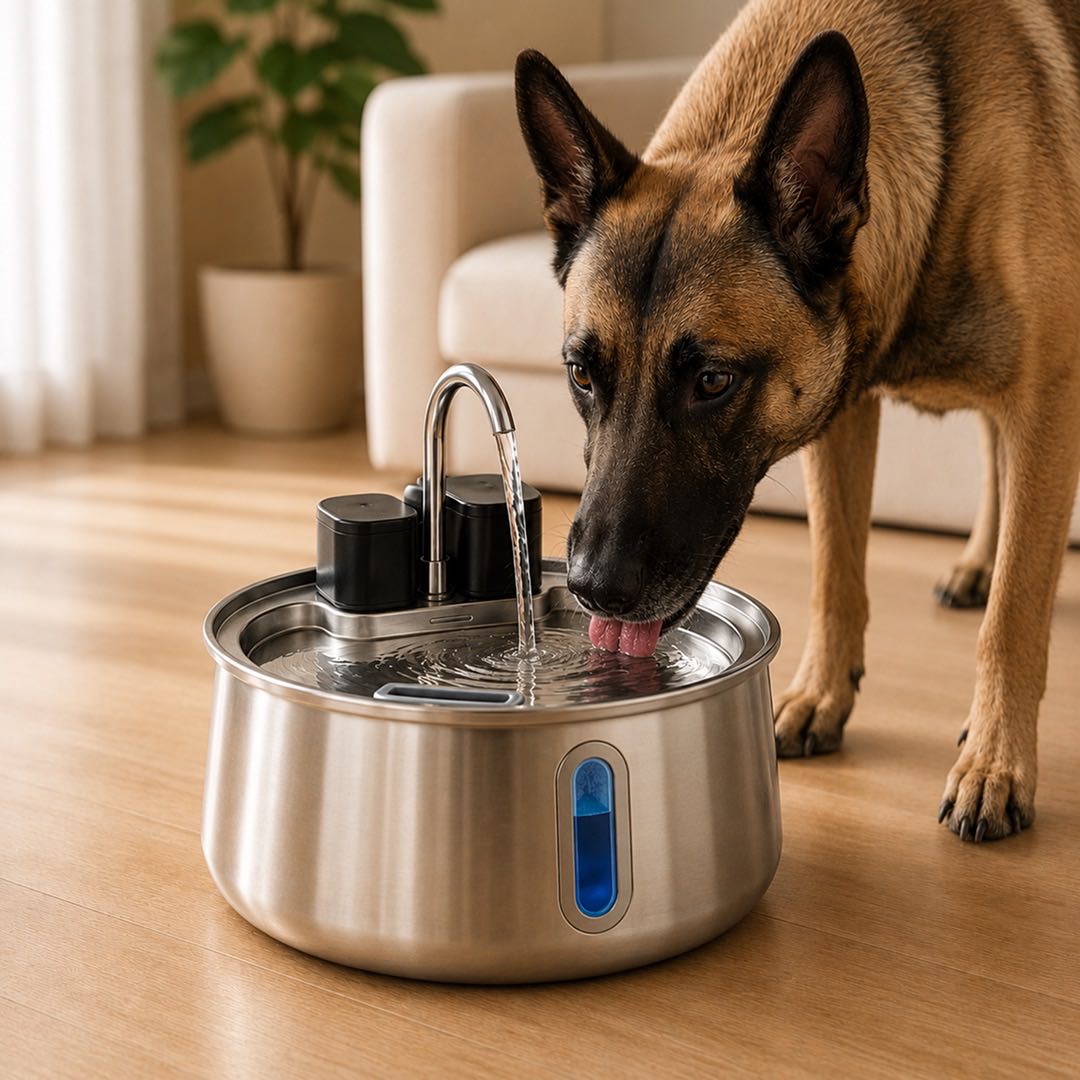
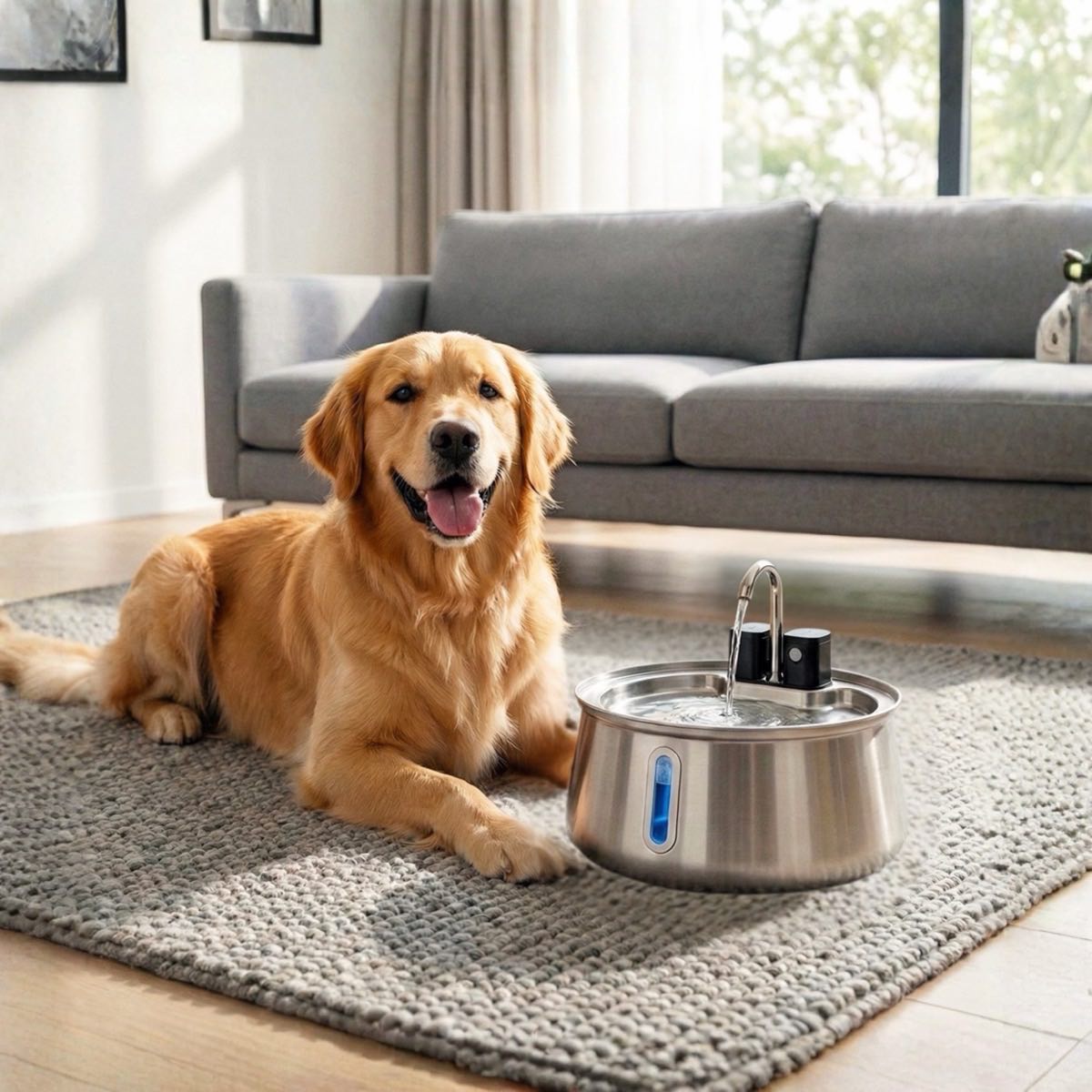
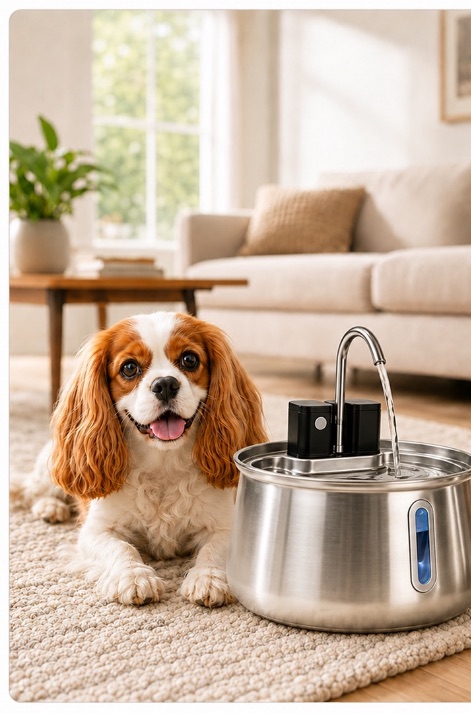
A fountain gives your dog another way to drink. Some dogs show interest in flowing water, but the AKC’s fountain guide cautions that preference and increased intake are not established for dogs as a group. Keep a normal bowl available while introducing one. [2]
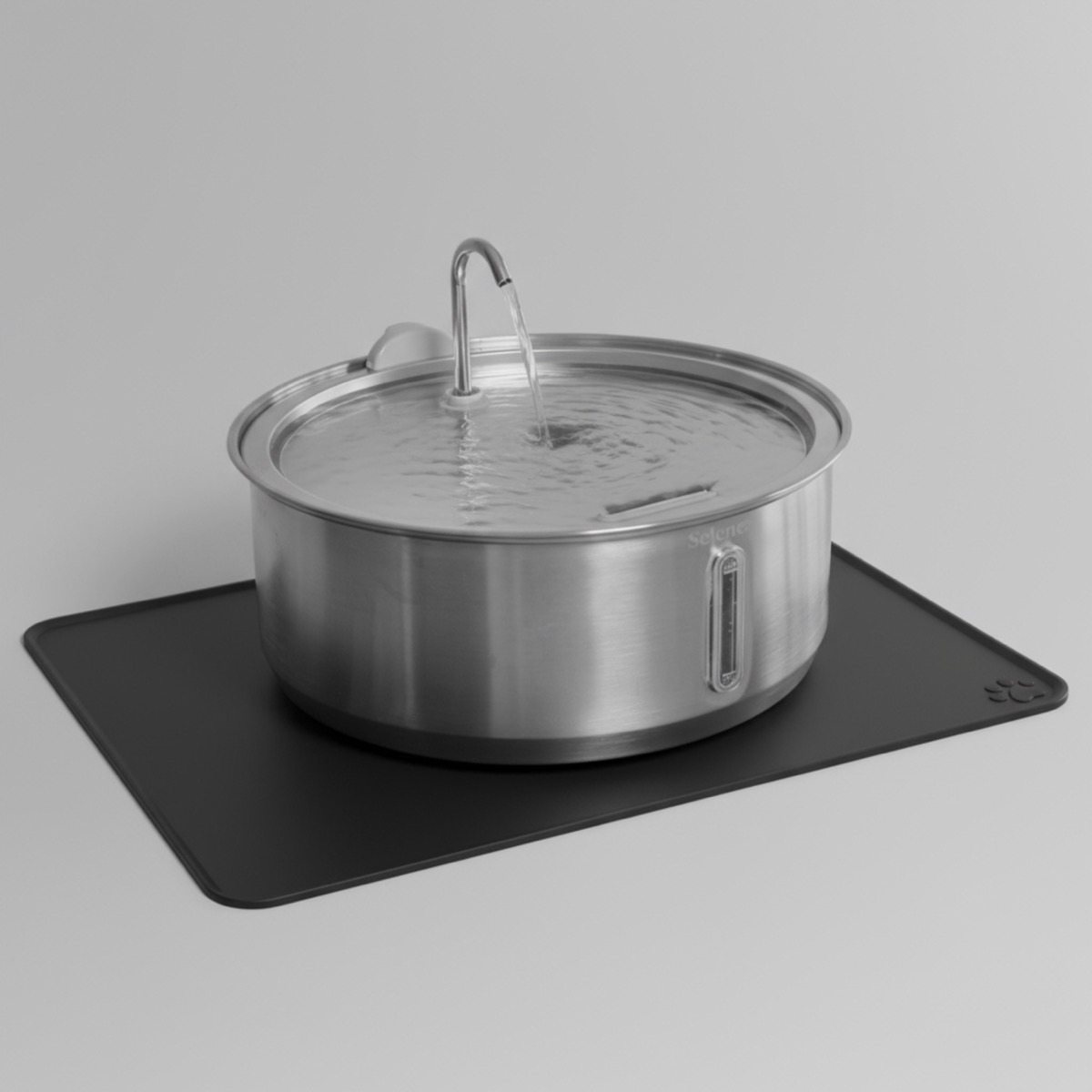
If you are choosing a fountain, begin with placement and upkeep. Selene lists 4L and 7L versions of the Doggy Fountain, with plug in and wireless options. Match the configuration to the room rather than assuming the largest reservoir will suit every home. [3]
05 / The detail
Choose the next step for the actual problem
For an unexplained change, speak to your vet. For a drinking station that is awkward to reach or maintain, improve the setup. For a dog that already drinks comfortably, a fountain is a choice to consider rather than something you need to buy to prove you are taking care of them.
Our related guides explain everyday drinking routines, approximate water needs and dehydration warning signs. Use the one that matches your concern before moving on to equipment.
Before you go
Your questions, answered
Why is my dog eating but not drinking?
Food moisture can affect how much a dog takes from the bowl, but continued eating does not rule out a problem. Discuss an unexplained reduction with your vet. [1]
Does a fountain fix a dog’s reluctance to drink?
It offers a different setup. Whether a particular dog uses it is individual, and it cannot treat an underlying illness.