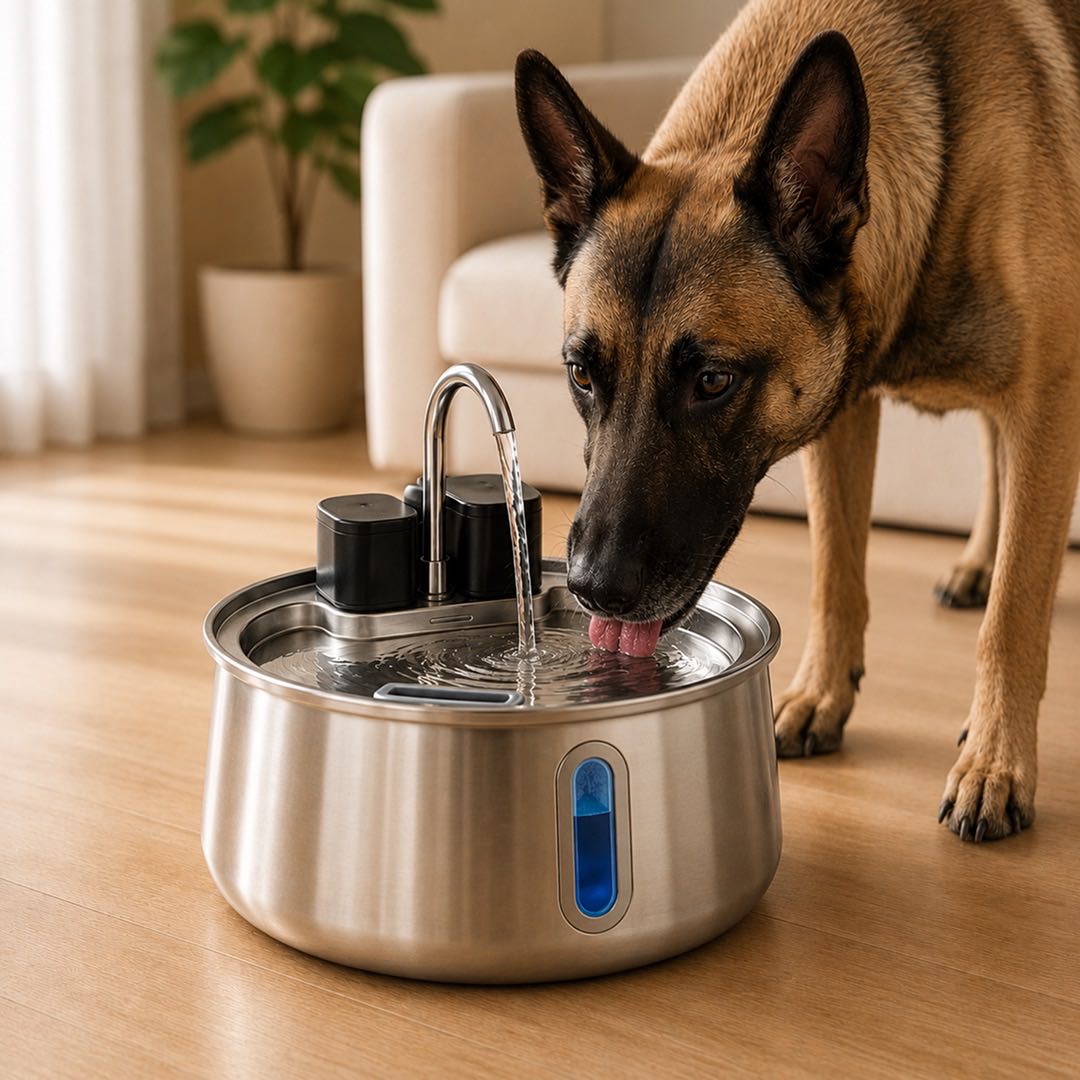
The useful goal is reliable access to water your dog is comfortable drinking. Start with a routine you can maintain, then choose equipment that supports it. If you are trying to solve a sudden or unexplained drop in drinking, contact your vet before treating it as a bowl problem.
The short answer
Understand the routine before choosing equipment
Use the care guidance below to decide your next step. Product features cannot establish what an individual dog needs or replace advice from your vet.
Understand the equipment01 / The detail
Make freshness a daily job
The AKC advises replacing water and cleaning the bowl or fountain daily. Circulation does not remove that responsibility, and a new filter does not wash the reservoir. [1]
Choose an easy moment to check the drinking station, such as when you prepare your dog’s meal. Keep a spare clean bowl ready so water remains available while you wash the other one. Put the cleaning brush somewhere convenient; a routine is easier to keep when it does not start with searching a cupboard.
02 / The detail
Give your dog more than one place to drink
The AKC suggests offering water in multiple locations, especially where dogs may compete for access. Leave a conventional bowl available when introducing a fountain, including as a backup if the pump stops. [1]
Walk the route your dog takes through the home. A water station tucked behind a door or across a slippery patch of floor may be convenient for the person arranging the room but inconvenient for the animal using it. Pick a stable spot you can also reach easily to inspect and clean.
Make the daily routine easier to keep, and the water easier to reach.
03 / The detail
Remember that meals contribute moisture
VCA notes that healthy dogs eating canned food may drink little from a bowl because their food contains substantial water. Bowl intake is only part of the picture. If your vet recommends changing a sick dog’s food or fluid routine, follow that individual plan. [2]
Do not add a collection of new foods or flavourings just to make the water disappear. Keeping the setup simple makes it easier to describe what has changed and avoids turning an everyday check into a guessing game.
04 / The detail
Introduce a fountain as an additional choice
Set it up according to the manual and let your dog approach at their own pace. Do not remove the familiar bowl to make the new equipment the only option. Watch how easily your dog can reach the water and whether the intended spot still works once the fountain is running.
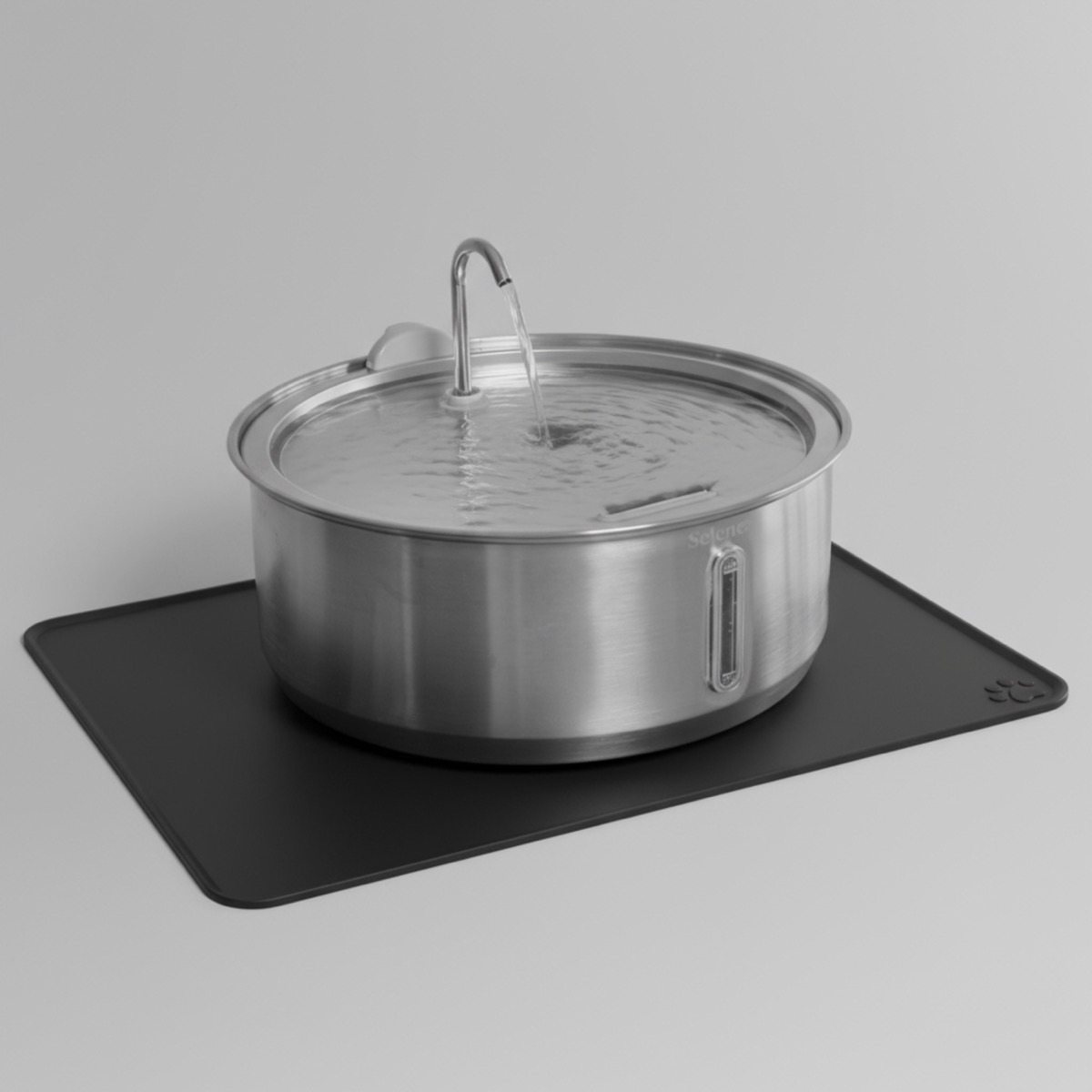
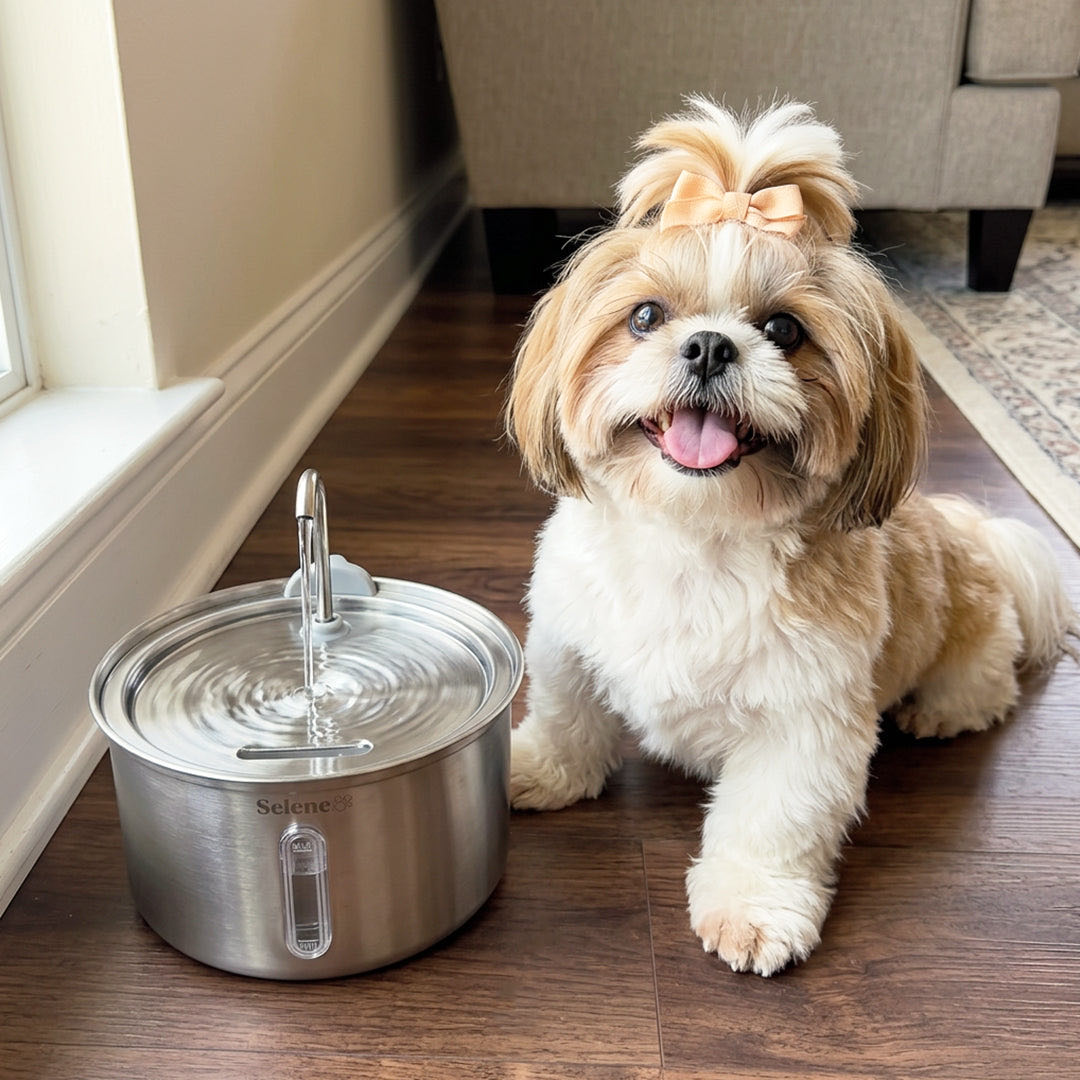
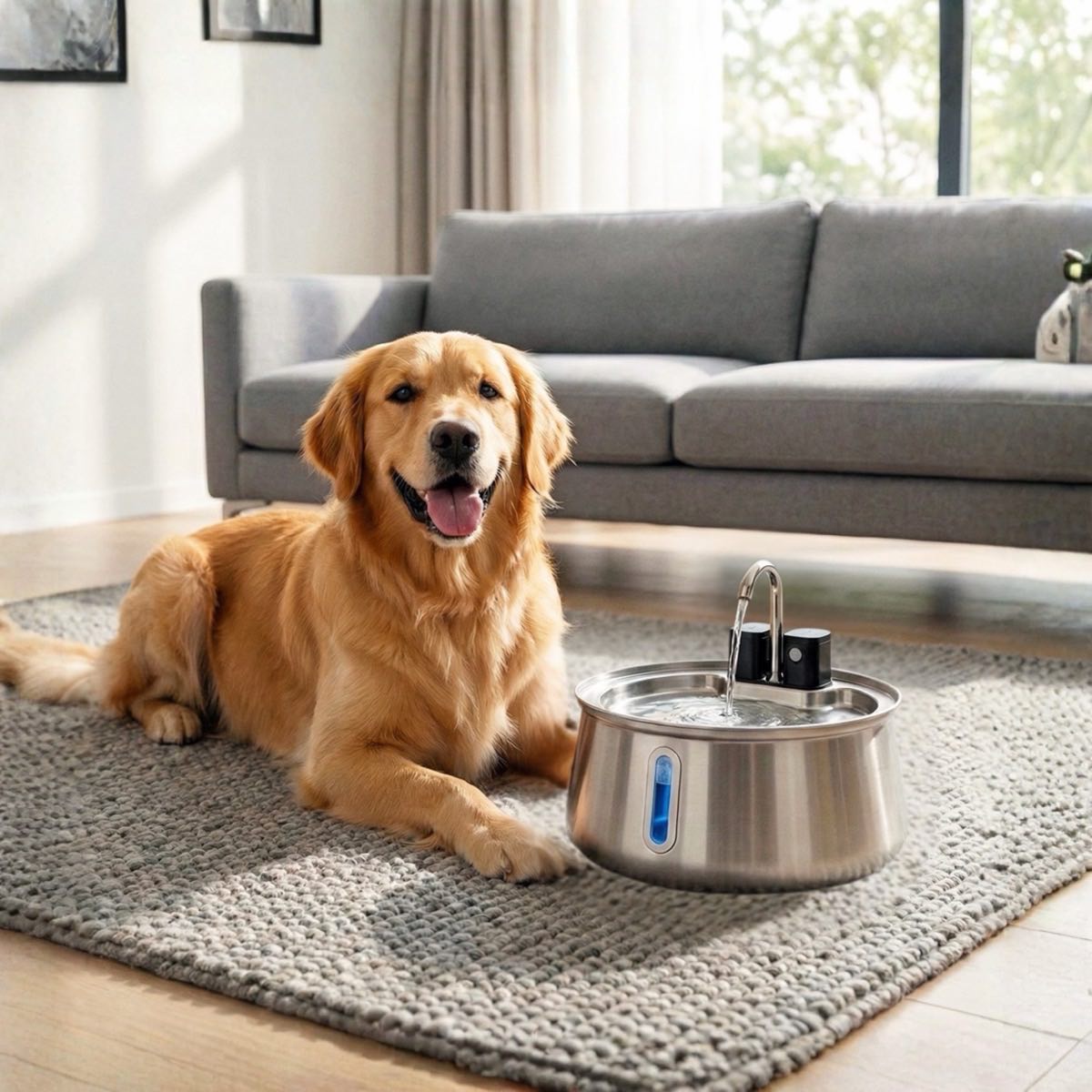
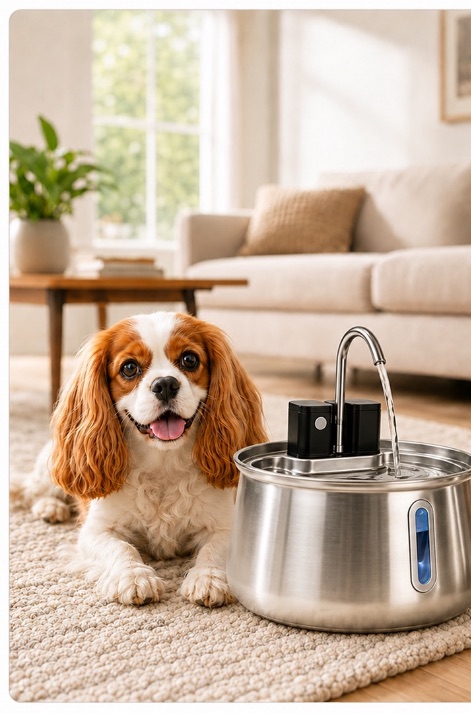
Selene’s Doggy Fountain offers two reservoir sizes and two power arrangements. Its maker describes three removable steel parts as dishwasher safe. Check the manual for the pump and electrical components, which need separate handling. [3]
Compare footprint, access for washing and replacement filters before buying. These are details you can evaluate before the first drink; a promise that every dog will drink more is not.
05 / The detail
Keep track of the dog, not just the reservoir
A fuller tank can make it harder to notice a small change by eye. Keep checking the water and pay attention to your dog’s usual behaviour rather than using refill frequency as the only signal.
If the concern continues despite an accessible, clean setup, return to your vet. A purchase should help with the daily routine, not postpone finding out why drinking has changed.
Before you go
Your questions, answered
Should I take away the old bowl when I buy a fountain?
Keep it available. It provides a familiar option and a backup during cleaning, charging or a pump interruption. [1]
Can I force my dog to drink?
Do not force water into your dog’s mouth. Ask your vet how to respond to refusal or suspected dehydration rather than attempting a home fluid treatment.