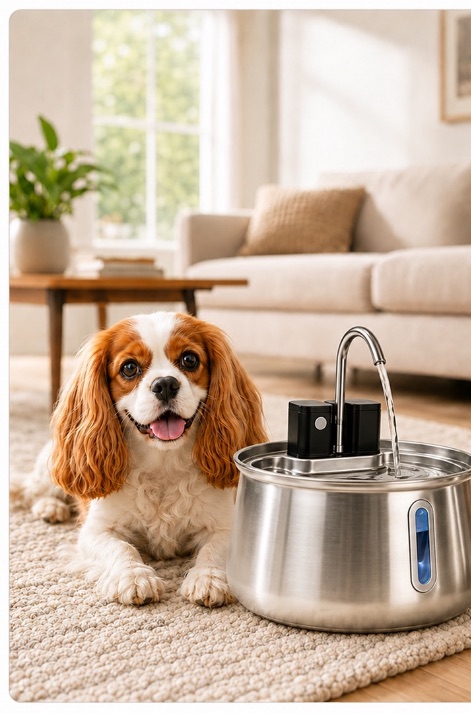
Searching for dehydration advice can mean you are worried about the dog beside you right now. Start with their condition, not a shopping decision. If you suspect dehydration, contact a vet promptly; severe weakness, collapse or suspected heatstroke need emergency veterinary care.
The short answer
Understand the routine before choosing equipment
Use the care guidance below to decide your next step. Product features cannot establish what an individual dog needs or replace advice from your vet.
Understand the equipment01 / The detail
What dehydration means
Dehydration occurs when fluid loss exceeds intake. Vomiting, diarrhoea, heat and illness can contribute, as can inadequate access to water. It affects circulation and electrolyte balance; severe dehydration can damage organs. It is more than simply being ready for a drink. [1]
A useful first question is what has happened recently. Tell the veterinary team about sickness, heat exposure, drinking changes and any existing medical condition. That context helps them decide how urgently your dog needs to be seen.
02 / The detail
Signs deserve attention, not a home diagnosis
The AKC lists signs including sticky gums, sunken eyes, loss of skin elasticity and lethargy. None should be used alone to decide that a dog is safe. A home skin check cannot establish the cause or replace an examination. [1]
Cornell identifies weakness, confusion, seizures and collapse among the signs of heatstroke, a life threatening emergency. If heatstroke is possible, seek emergency veterinary help immediately. [2]
Describe what you can actually see rather than trying to assign a percentage of dehydration. For example, tell the vet whether your dog is alert, can stand and has been vomiting. Do not delay the call to complete an online checklist.
Treat the dog’s condition first. Review the drinking setup afterwards.
03 / The detail
What to do while arranging help
Call your vet or the nearest emergency practice and follow their instructions. Tell them if your dog cannot keep water down, seems very weak or is getting worse. Do not force water into the mouth or try to correct a suspected fluid deficit with a large drink.
Avoid guessing doses of electrolyte products or medicines. A treatment suggested for one dog may not fit another. If you are asked to travel in, take relevant medication details and a short account of symptoms; gathering these should not delay leaving.
04 / The detail
How vets treat dehydration
Treatment depends on the severity and cause. Veterinary fluid therapy is tailored to the patient’s fluid deficits and electrolyte needs, with monitoring to avoid inappropriate correction. Some dogs need intravenous fluids and further treatment for the illness causing the loss. [3]
This is why a fountain cannot serve as a treatment for dehydration. A pump changes the way water is presented. It cannot assess circulation, replace a veterinary fluid plan or resolve a cause such as ongoing vomiting.
05 / The detail
Return to the daily routine after care
Once your vet has advised on recovery, review how water is provided at home. Keep drinking stations accessible, check them regularly and choose equipment you can clean consistently. Write down any instructions about monitoring so everyone caring for the dog follows the same plan.
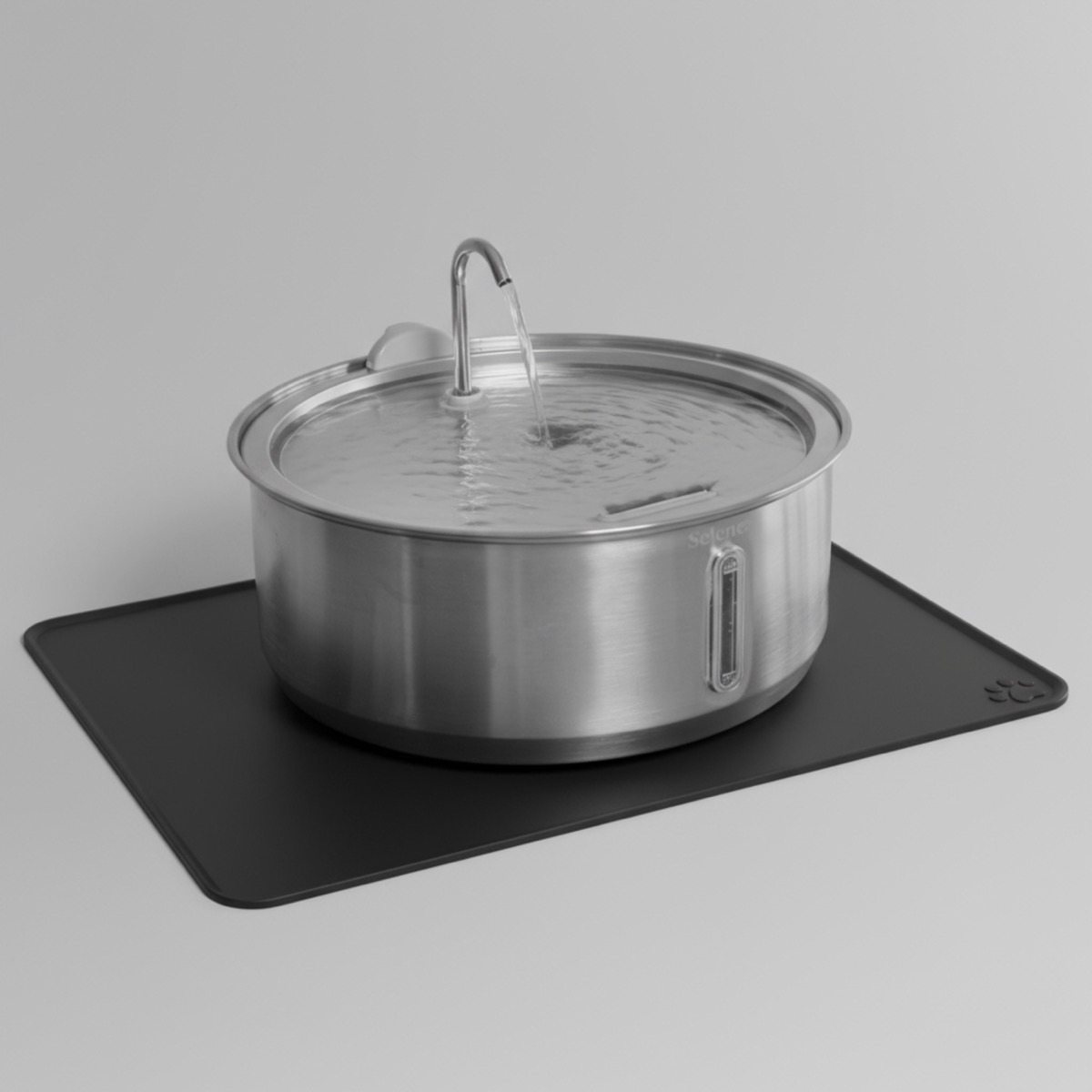
For future equipment choices, our fountain guide explains capacity, placement and cleaning, including Selene’s options. That is a separate decision from getting help for a dog that is dehydrated today.
Before you go
Your questions, answered
Can I treat dehydration at home?
Do not assume suspected dehydration can be managed at home. Contact your vet for advice based on your dog’s symptoms and condition; severe signs need emergency care.
Will a water fountain prevent dehydration?
No product can guarantee that. A fountain is one way to provide water, while illness and fluid losses may still require veterinary care.